The library

Eight cognitive families, one exercise for each need.

Search for an exercise or filter by family, then open a card to read what it trains, its indicators and its settings.

33 exercises shown.

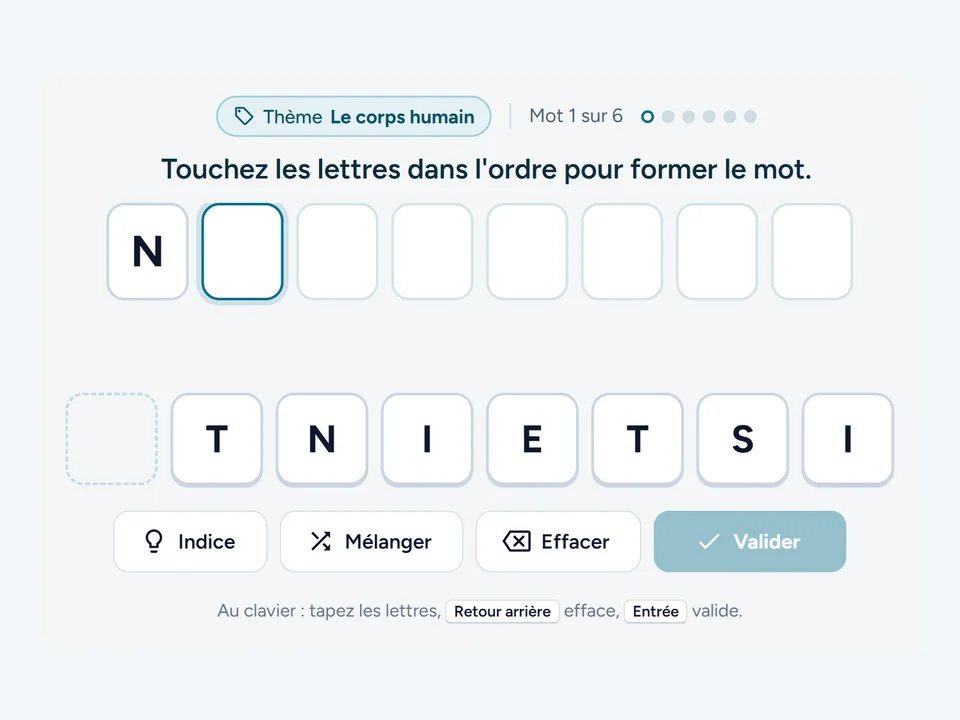
Screenshot of the Anagram exercise

Language & reading

Anagram

The letters of a word are shuffled: the patient puts them back in order.

Sequential decoding

Anagram

What it trains
Access to spelling, phonological decoding, short-term verbal memory.
Clinical value
Strengthens lexical access and reading. Attempts per word show how many tries it took to restore the letter order.
Settings
Word categories · FR · EN · HE · Levels 1 to 3, word length
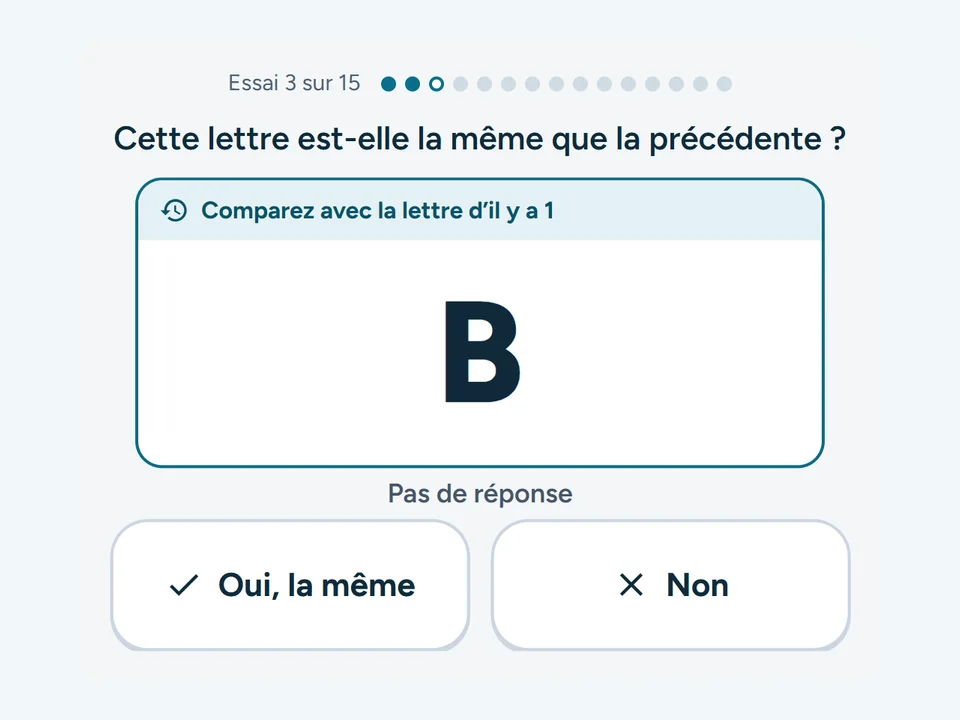
Screenshot of the Memory Card exercise

Memory

Memory Card

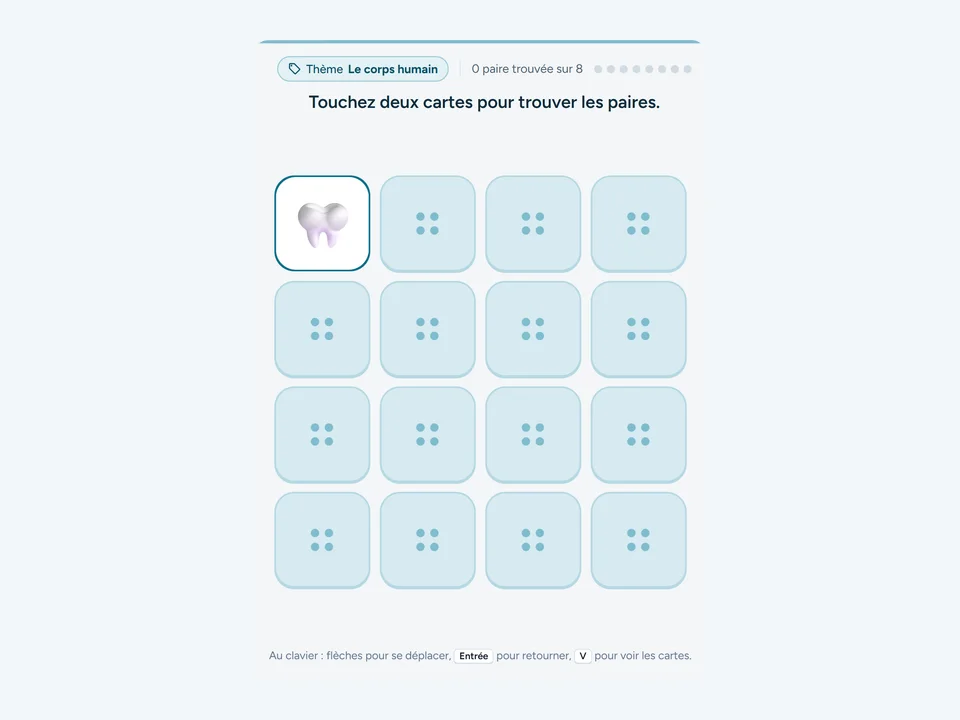
Pairs of cards lie face down: the patient turns them over two at a time.

Working memory

Memory Card

What it trains
Visuospatial working memory, memorisation strategy.
Clinical value
Trains visual memory. Accuracy relates the pairs found to the number of moves played.
Settings
Emojis or pictures · Language-independent · Grid from 4 × 4 to 6 × 6
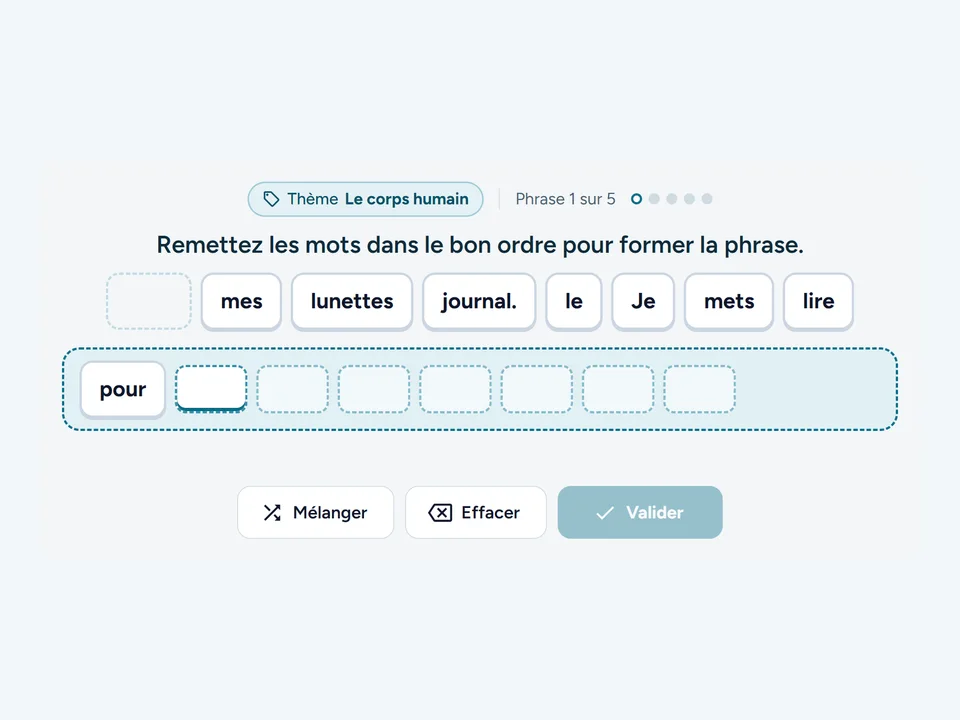
Screenshot of the Sentence Reconstruction exercise

Language & reading

Sentence Reconstruction

The words of a sentence are shuffled: the patient drags them back into place.

Sequential decoding

Sentence Reconstruction

What it trains
Syntax, understanding of structure, sequential planning.
Clinical value
Retrains sentence building. Corrections show where grammar hesitates.
Settings
Sentence registers · FR · EN · HE · Levels 1 to 3, length and syntax
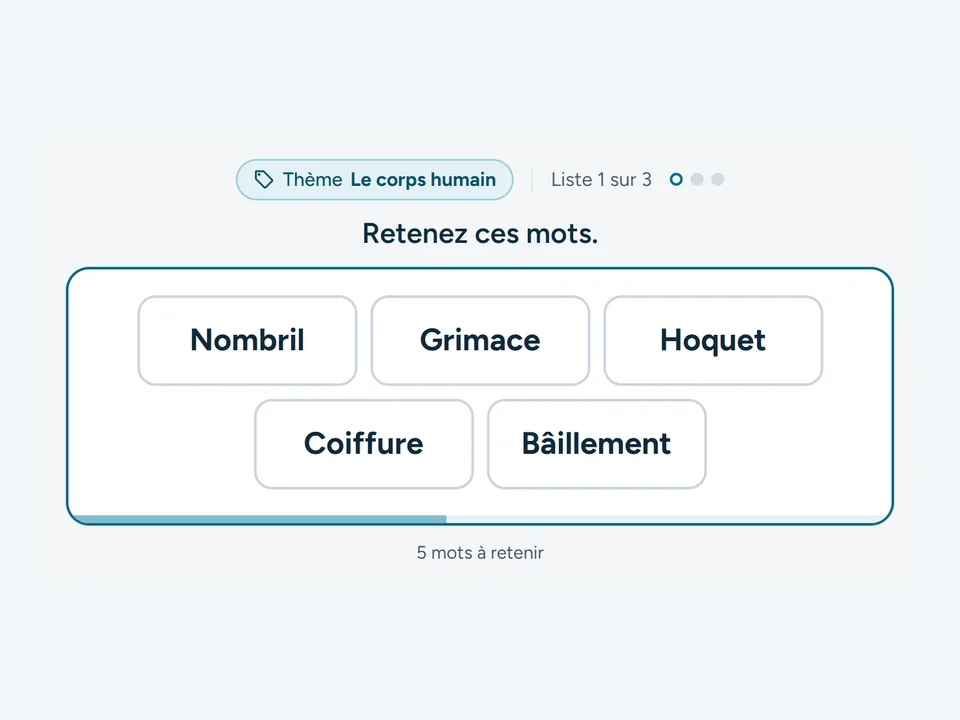
Screenshot of the Memory List exercise

Memory

MMSE ~MoCA ~

Memory List

A list of words appears for a few seconds, then the patient finds it among distractors.

Working memory

Memory List

What it trains
Short-term encoding and recognition.
Clinical value
Follows recognition memory. Ticked distractors and missed targets are counted separately.
Settings
Word categories · FR · EN · HE · Levels 1 to 3, length and distractors
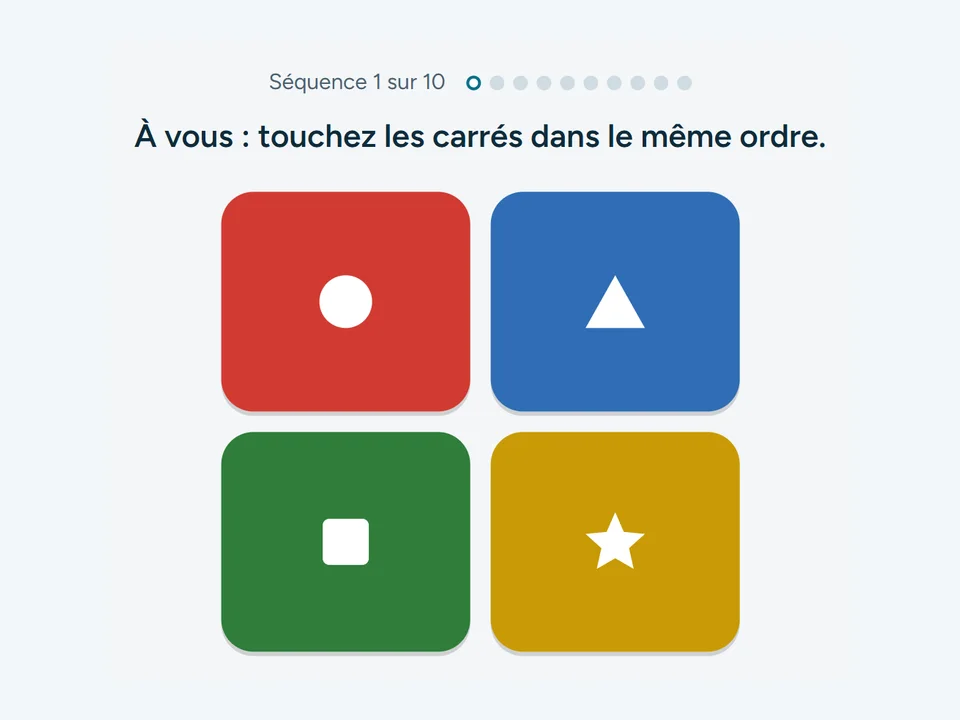
Screenshot of the Simon Says exercise

Memory

MoCA ~

Simon Says

A sequence of colours and sounds plays: the patient repeats it, and it grows with every successful round.

Working memory

Simon Says

What it trains
Sequential working memory, visual and auditory.
Clinical value
Follows the level reached, in completed rounds, from one session to the next.
Settings
No theme · Language-independent · Levels 1 to 3, speed and colours
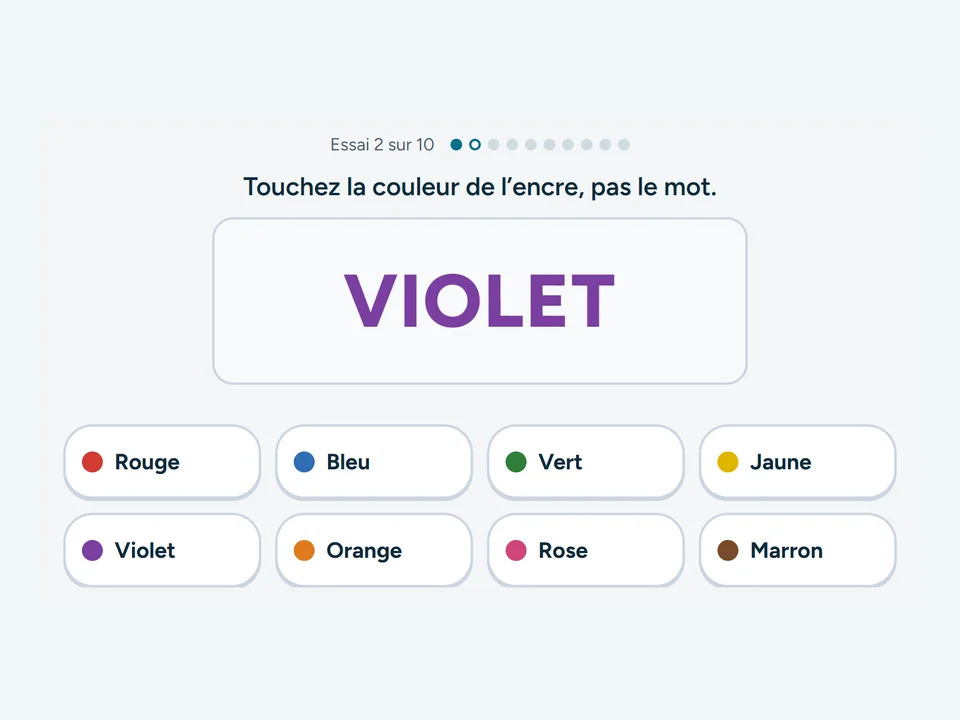
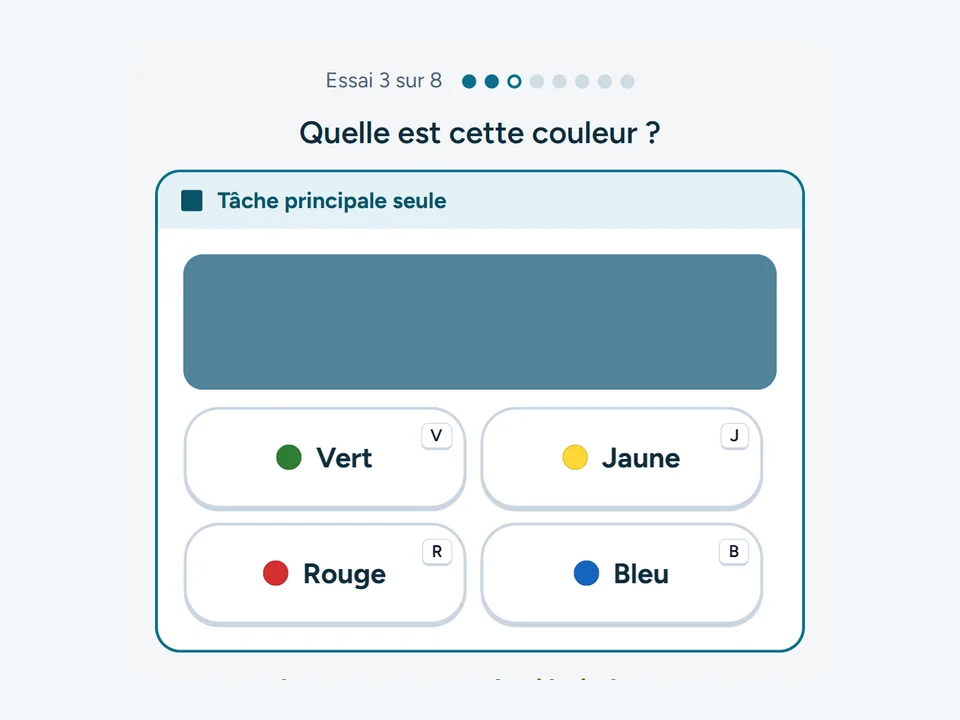
Screenshot of the Stroop Test exercise

Attention & inhibition

Stroop Test

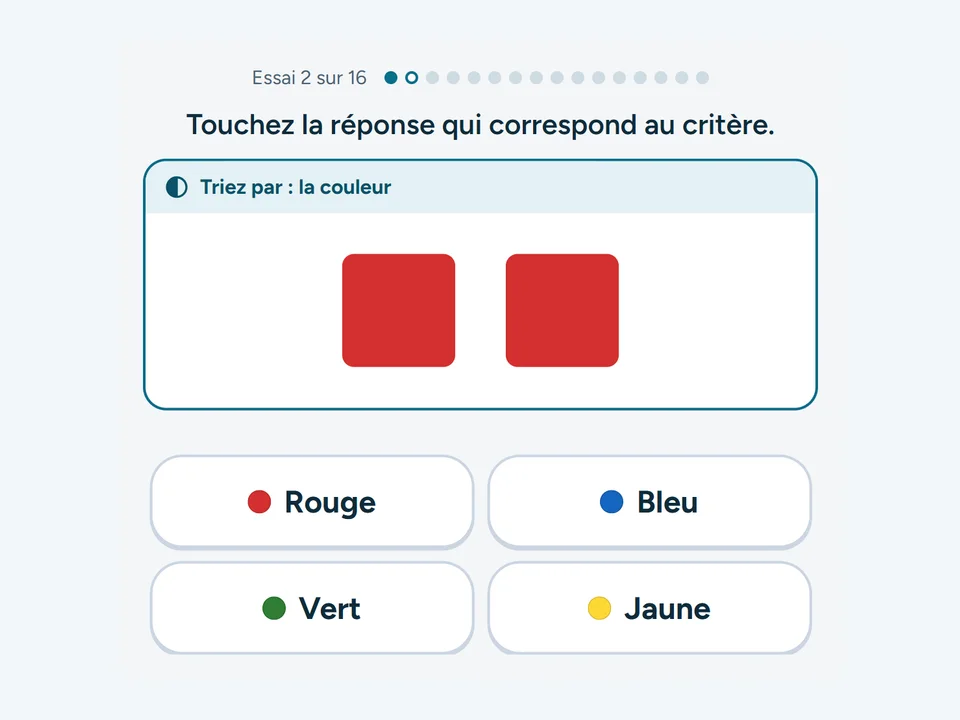
A colour name is printed in another ink: the patient picks the ink colour.

Reaction time & inhibition

Stroop Test

What it trains
Inhibition, attentional control, conflict resolution.
Clinical value
A high congruency effect for this patient, from one session to the next, makes an inhibition difficulty measurable, ready to be worked on.
Settings
No theme · FR · EN · HE (colour words) · Levels 1 to 3, share of incongruent trials
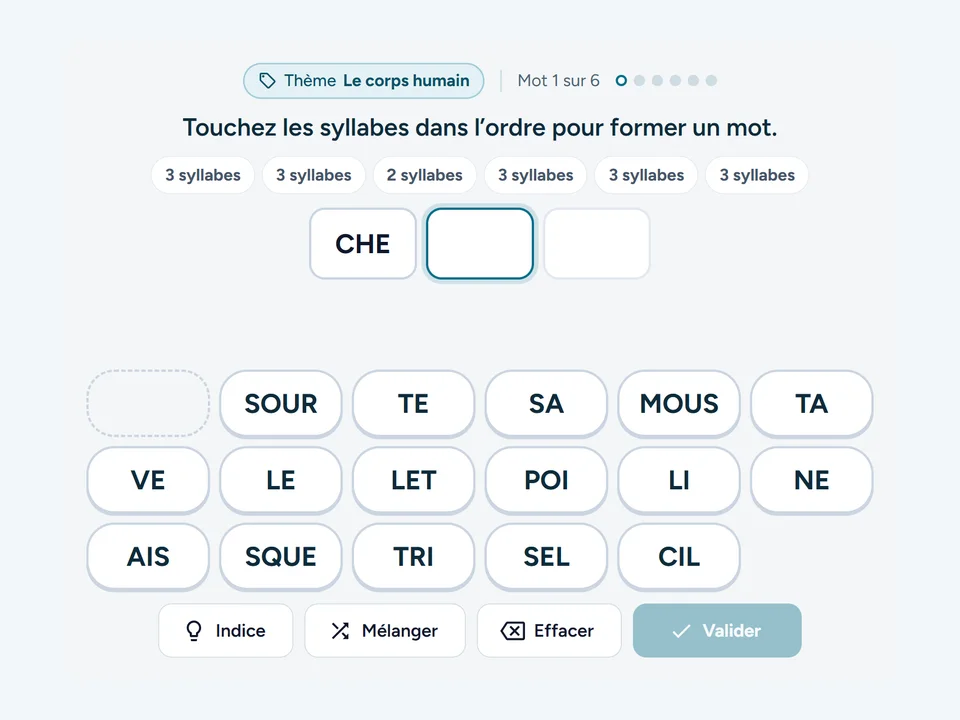
Screenshot of the Syllable Game exercise

Language & reading

Syllable Game

The syllables of a word arrive out of order: the patient assembles them.

Sequential decoding

Syllable Game

What it trains
Phonological segmentation, syllable awareness.
Clinical value
Works on syllable segmentation. Attempts per item show what it took to assemble the word.
Settings
Word categories · FR · EN · HE · Levels 1 to 3, number of syllables
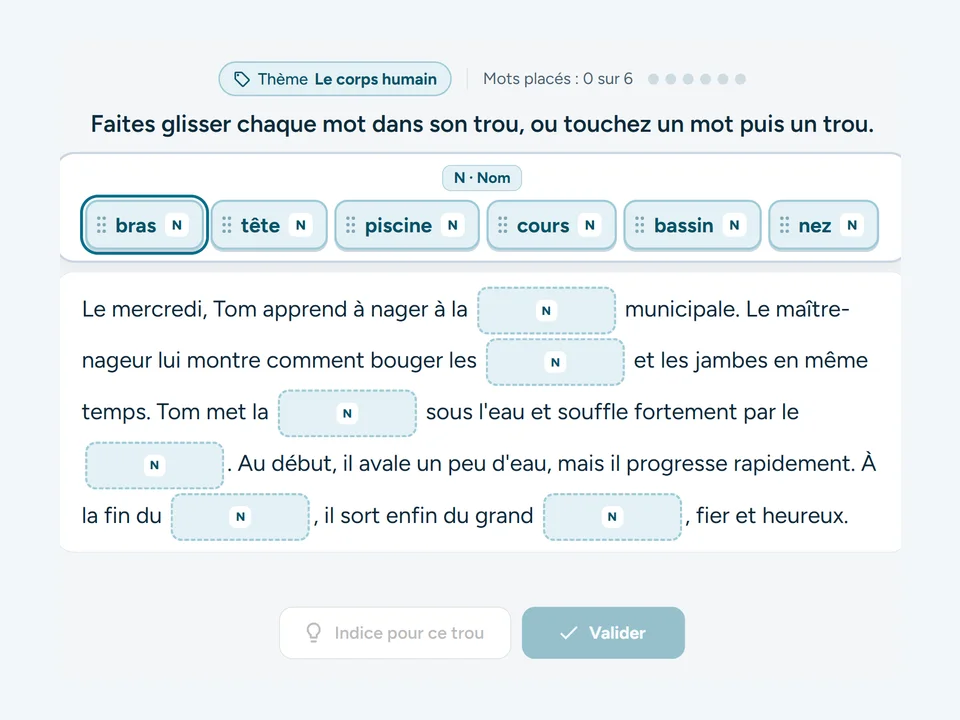
Screenshot of the Fill in the Blanks exercise

Language & reading

Fill in the Blanks

Words are missing from a text: the patient drops each one in its place.

Sequential decoding

Fill in the Blanks

What it trains
Understanding in context, lexical memory, functional reading.
Clinical value
Trains reading for meaning. Accuracy and time per item read together, from one session to the next.
Settings
Text registers · FR · EN · HE · Levels 1 to 3, number of blanks and ambiguity
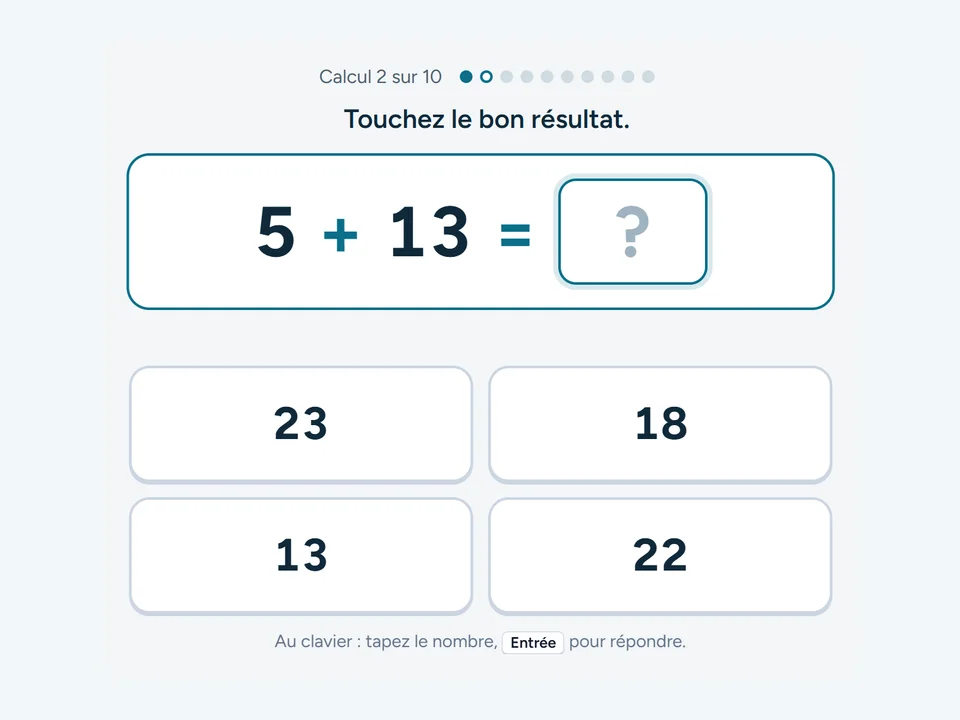
Screenshot of the Mental Math exercise

Calculation & executive

MMSE ~MoCA ~

Mental Math

An operation appears: the patient picks the right answer out of four.

Sequential decoding

Mental Math

What it trains
Arithmetic facts, mental calculation, inhibition of numerical distractors.
Clinical value
Keeps calculation and numerical speed going. With automatic draw, the operations change every session.
Settings
No theme · Language-independent · Levels 1 to 3, complexity of operations
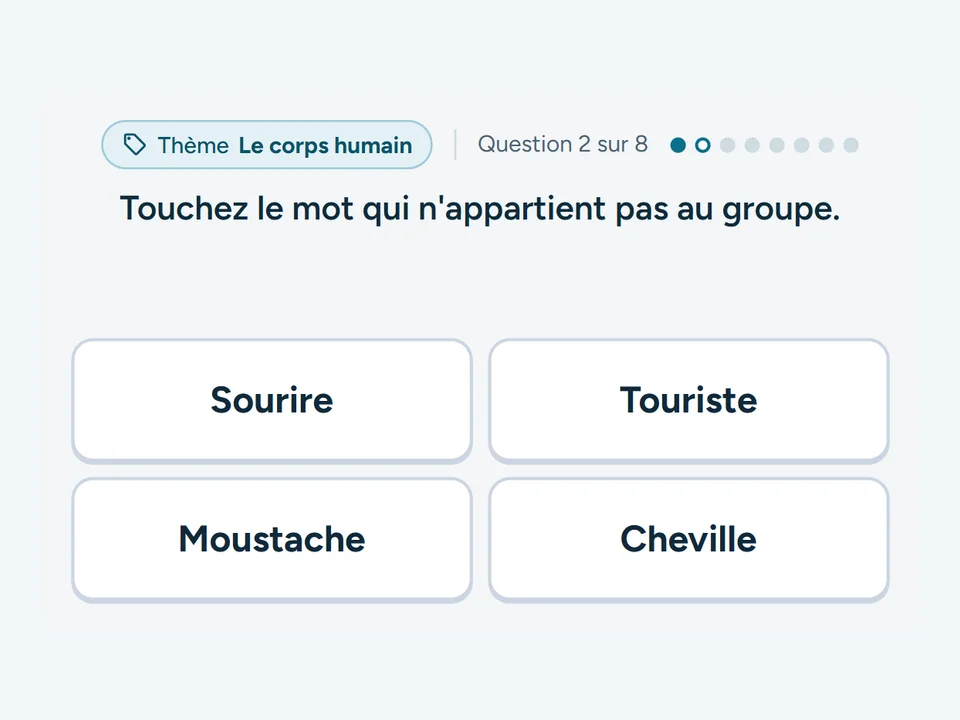
Screenshot of the Find the Intruder exercise

Language & reading

Find the Intruder

Among several words, one belongs to another category: the patient spots it.

Sequential decoding

Find the Intruder

What it trains
Semantic categorisation, access to concepts.
Clinical value
Works on semantic organisation, category by category.
Settings
Word categories · FR · EN · HE · Levels 1 to 3, semantic proximity
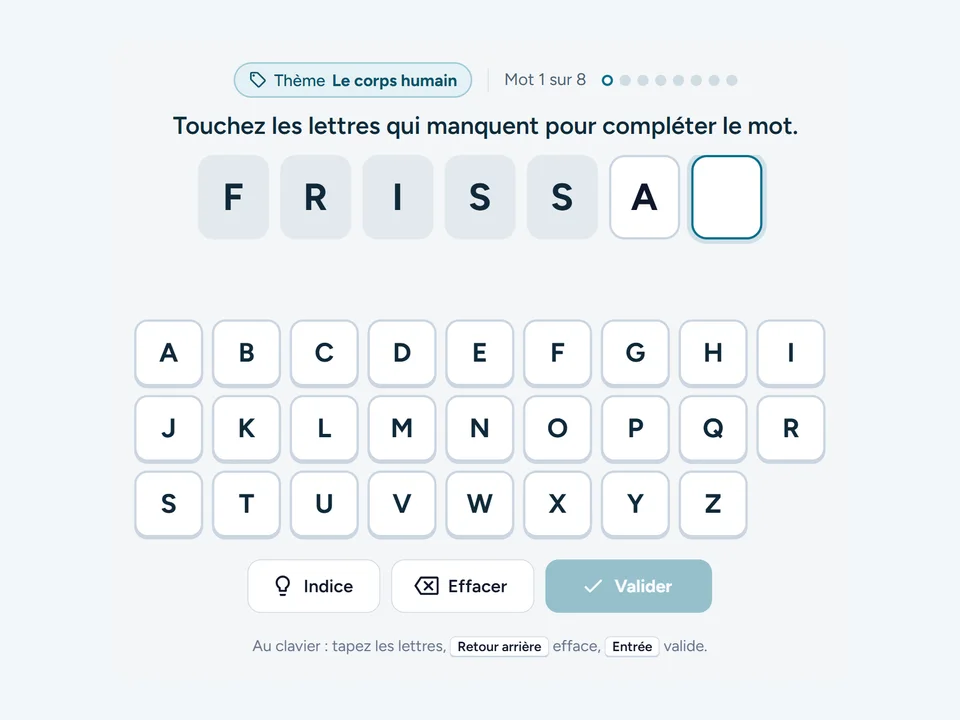
Screenshot of the Word Completion exercise

Language & reading

Word Completion

The start of a word appears: the patient types the missing letters, with progressive hints.

Sequential decoding

Word Completion

What it trains
Word retrieval, orthographic memory.
Clinical value
Targets word-finding difficulty. The number of hints measures how much help was needed.
Settings
Word categories · FR · EN · HE · Levels 1 to 3, length to complete
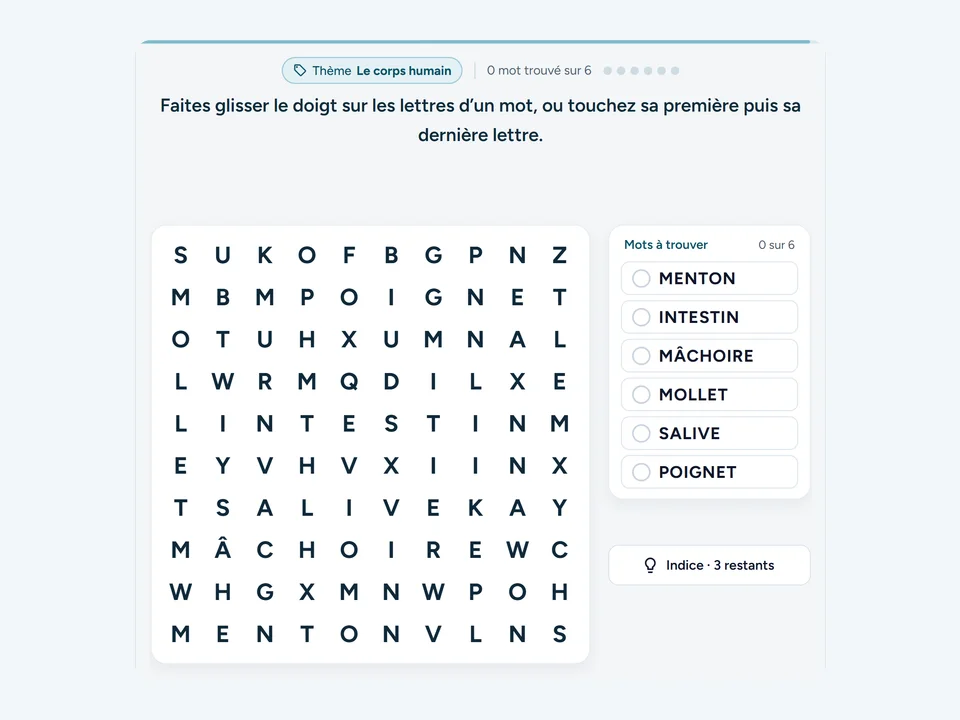
Screenshot of the Word Search exercise

Language & reading

Word Search

A letter grid hides words: the patient selects them with a swipe.

Sequential decoding

Word Search

What it trains
Selective visual attention, visual scanning, sustained attention.
Clinical value
Trains visual scanning. Words found per minute follow search speed from one session to the next.
Settings
Word lists · FR · EN · HE · Levels 1 to 3, grid size
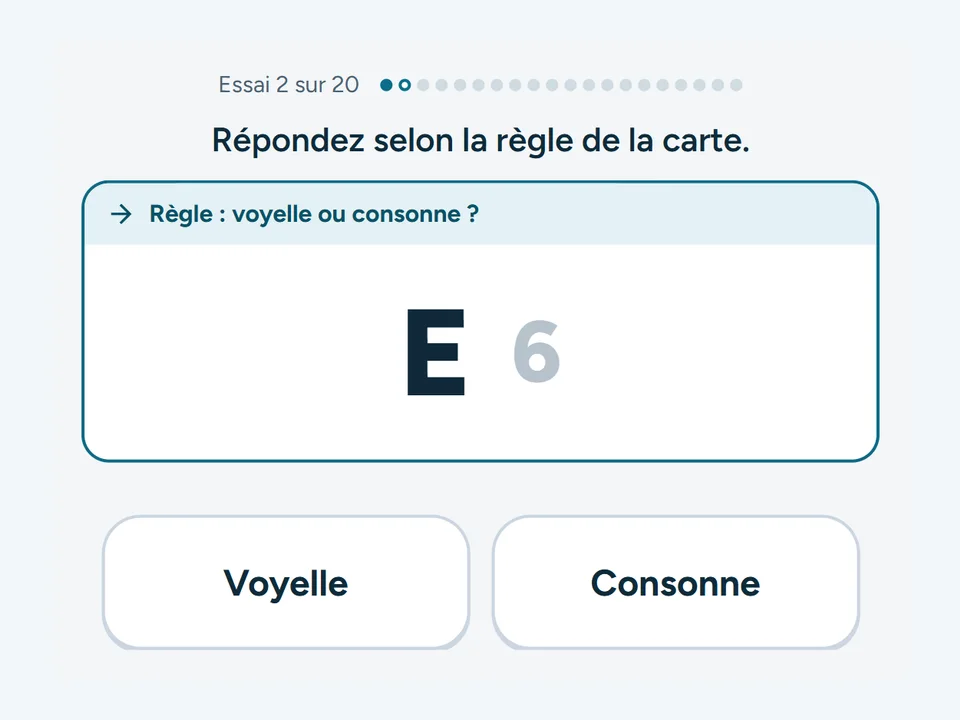
Screenshot of the Rule Flip exercise

Flexibility

Rule Flip

Digit-and-letter cards appear; the rule alternates between vowel or consonant and odd or even.

Task switching & flexibility

Rule Flip

What it trains
Mental flexibility, cost of switching rules.
Clinical value
The switch cost measures what each rule change costs the patient, from one session to the next.
Settings
No theme · Language-independent · Levels 1 to 3, switch frequency
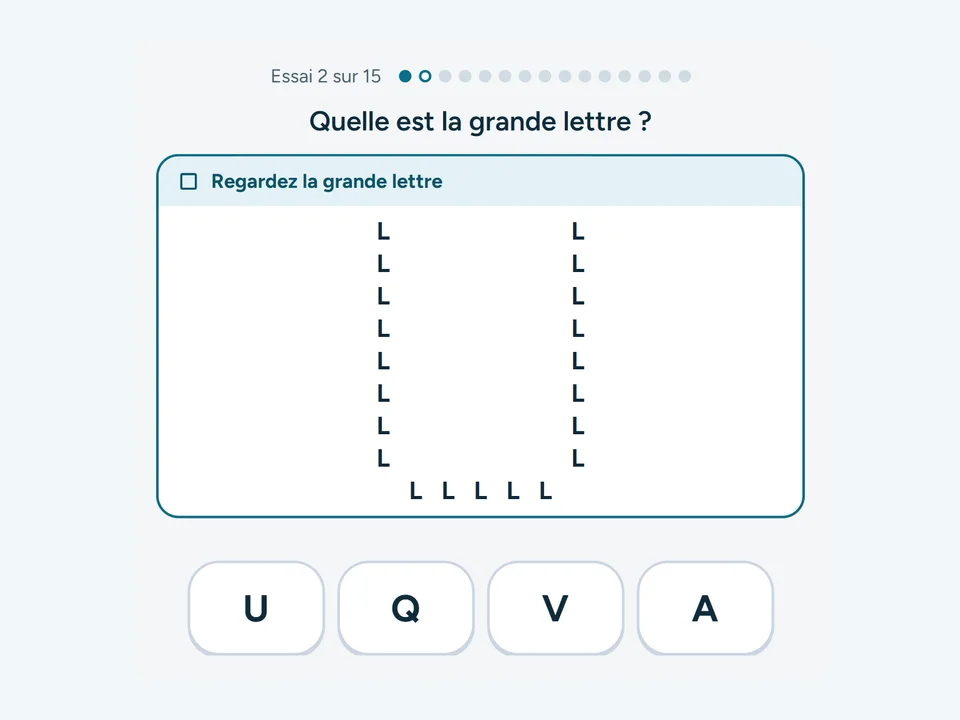
Screenshot of the Letter in a Letter exercise

Attention & inhibition

Letter in a Letter

A large letter is made of small letters: the patient names either the large one or the small ones.

Reaction time & inhibition

Letter in a Letter

What it trains
Global and local processing, inhibition of the irrelevant level.
Clinical value
Works on moving from detail to the whole, and back.
Settings
No theme · Language-independent · Levels 1 to 3, share of incongruent trials
Screenshot of the Multi-Criteria Sort exercise

Flexibility

Multi-Criteria Sort

Cards (colour, shape, number) are sorted by a criterion that changes during the exercise.

Task switching & flexibility

Multi-Criteria Sort

What it trains
Multi-criteria flexibility, conditional rules.
Clinical value
Builds adaptation to a new rule, on the principle of the Wisconsin test.
Settings
No theme · Language-independent · Levels 1 to 3, number of criteria
Screenshot of the Sense Switch exercise

Flexibility

Sense Switch

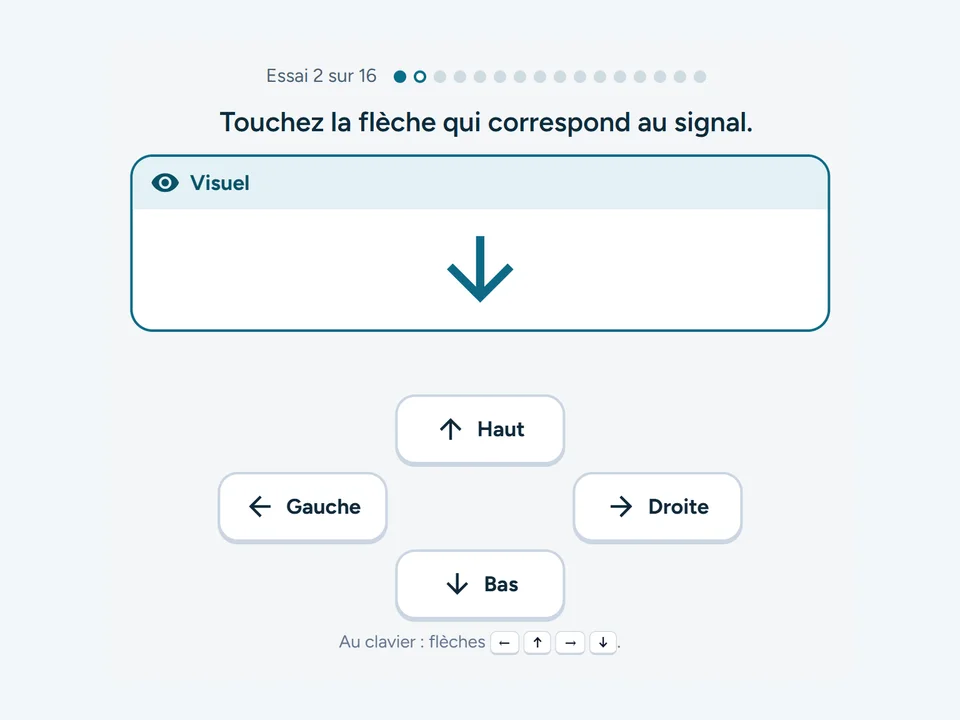
Arrows and sounds alternate: the patient answers the direction given in the requested sense.

Sensory multimodality

Sense Switch

What it trains
Flexibility between vision and hearing, sensory dominance.
Clinical value
Measures the cost of moving from one sense to the other.
Settings
No theme · Language-independent · Levels 1 to 3, switch frequency
Screenshot of the Spatial Reflex exercise

Attention & inhibition

Spatial Reflex

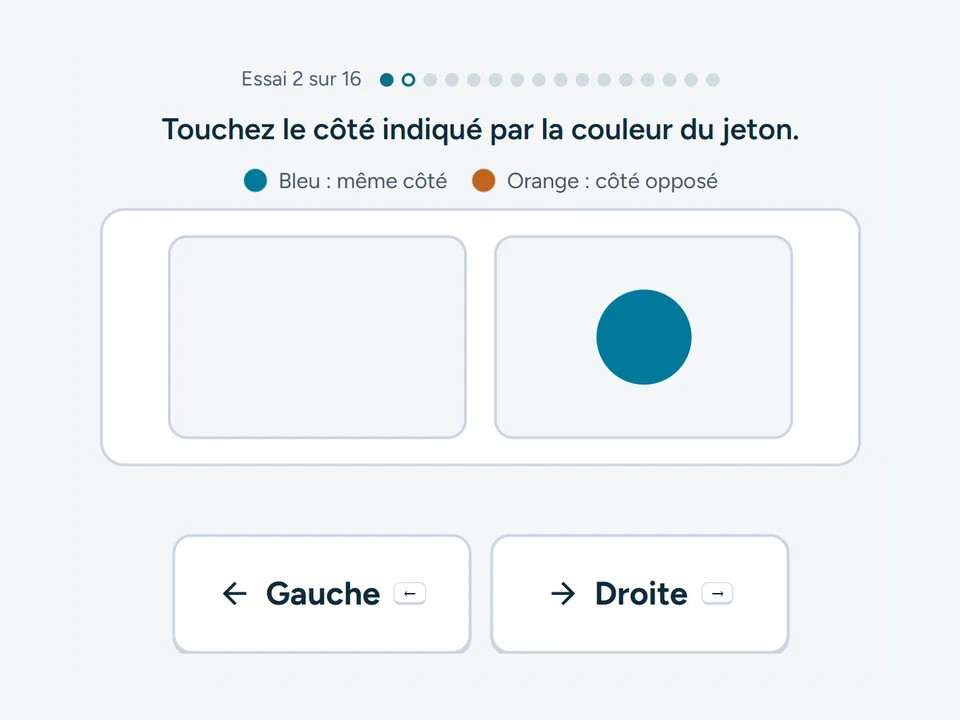
A coloured circle appears left or right; its colour says to answer on the same side or the opposite one.

Reaction time & inhibition

Spatial Reflex

What it trains
Inhibition of the automatic response (rule compatibility effect).
Clinical value
Works on motor inhibition and control of impulsivity.
Settings
No theme · Language-independent · Levels 1 to 3, share of incongruent trials
Screenshot of the Symbol Decoder exercise

Flexibility

Symbol Decoder

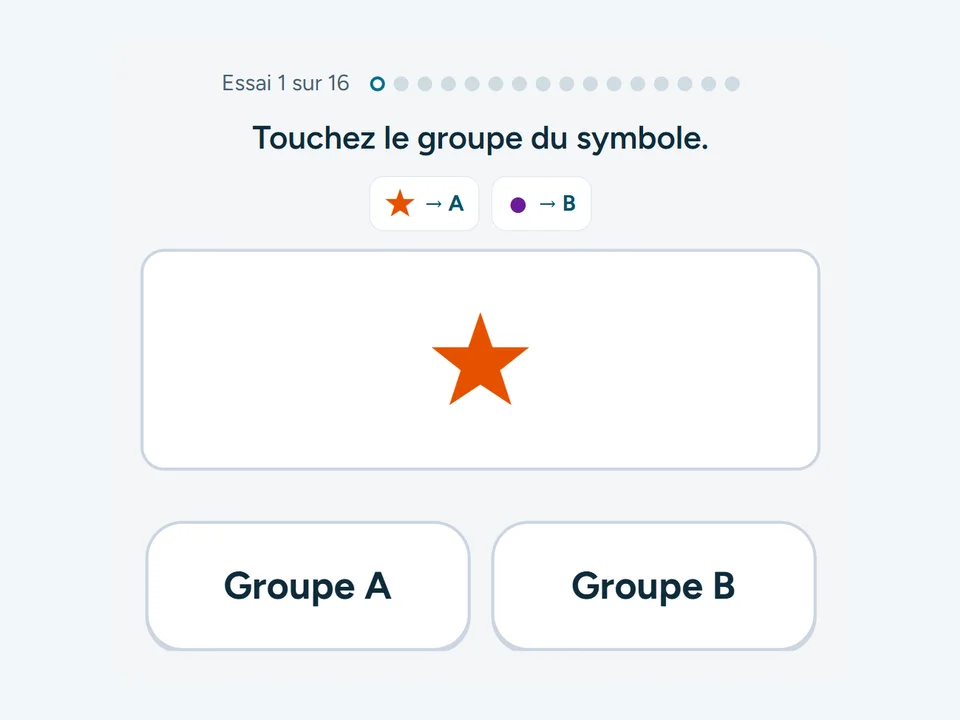
The patient sorts symbols with a key that changes at every RESET signal.

Task switching & flexibility

Symbol Decoder

What it trains
Rule updating, reactive flexibility.
Clinical value
Perseveration errors count the answers that still follow the previous rule.
Settings
No theme · Language-independent · Levels 1 to 3, RESET frequency
Screenshot of the N‑Back Memory exercise

Memory

N‑Back Memory

Stimuli scroll past: the patient flags each one identical to the stimulus seen N positions earlier.

Advanced working memory

N‑Back Memory

What it trains
Continuous updating of working memory.
Clinical value
Intensive working memory training, from 1‑back to 3‑back.
Settings
No theme · Language-independent · Levels 1 to 3, from 1‑back to 3‑back
Screenshot of the Verbal Fluency exercise

Language & reading

MoCA ~

Verbal Fluency

A category is given: the patient quickly accepts the words that belong to it and rejects intruders.

Verbal fluency

Verbal Fluency

What it trains
Lexical output, semantic organisation, inhibition of intrusions.
Clinical value
Follows lexical output and semantic organisation from one session to the next.
Settings
Semantic category · FR · EN · HE · Levels 1 to 3, closeness of distractors
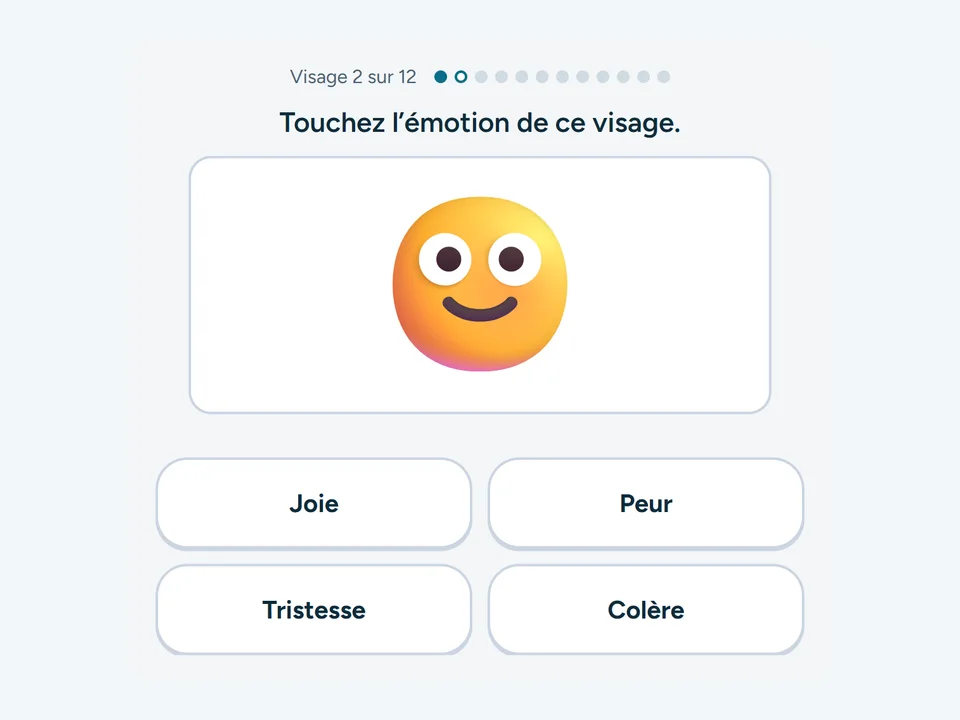
Screenshot of the Emotion Recognition exercise

Social cognition

Emotion Recognition

A face shows an emotion: the patient picks it from several options.

Social cognition

Emotion Recognition

What it trains
Decoding facial expressions, social cognition.
Clinical value
Spots the emotions the patient confuses and any bias towards the negative.
Settings
No theme · FR · EN · HE (labels) · Levels 1 to 3, ambiguity of expressions
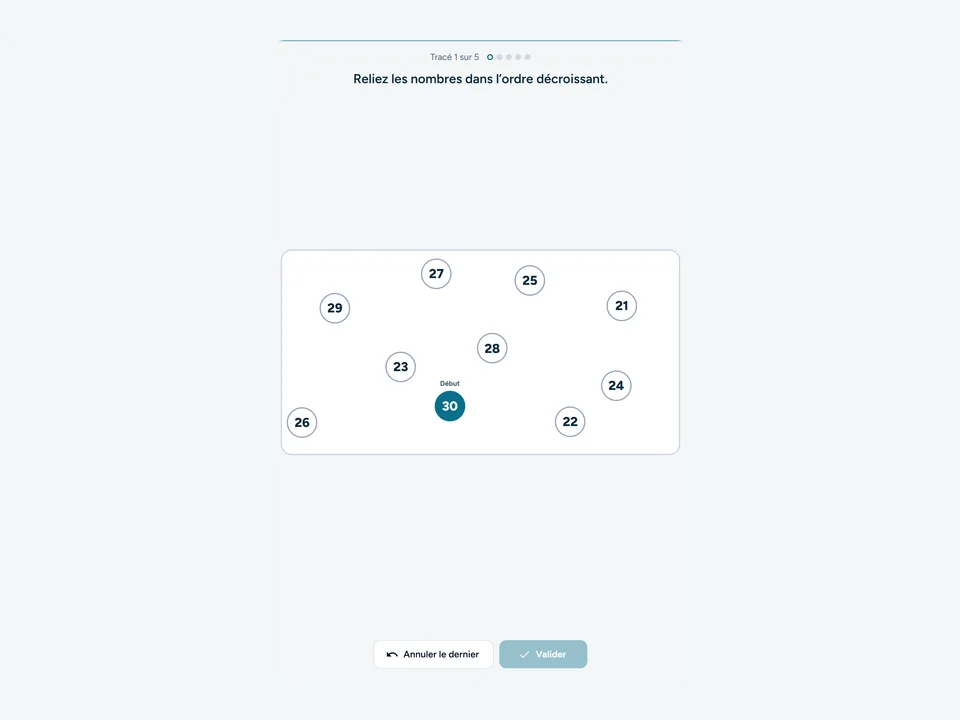
Screenshot of the Trail Making exercise

Calculation & executive

MoCA ~

Trail Making

The patient links circles in order: digits only (part A), then digits and letters alternately (part B).

Visuomotor executive functions

Trail Making

What it trains
Visuo-attentional speed (A), cognitive flexibility (B).
Clinical value
Follows the principle of the Trail Making Test. Contents of parts A and B are drawn at random: the B / A ratio is not that of a normed TMT.
Settings
No theme · Language-independent · Part A, then parts A and B
Screenshot of the Dual Task exercise

Calculation & executive

Dual Task

The patient performs each task alone, then both at the same time.

Divided attention

Dual Task

What it trains
Divided attention, sharing of attentional resources.
Indicators
Clinical value
Measures what handling two tasks at once costs.
Settings
No theme · Language-independent · Levels 1 to 3, phases and time pressure
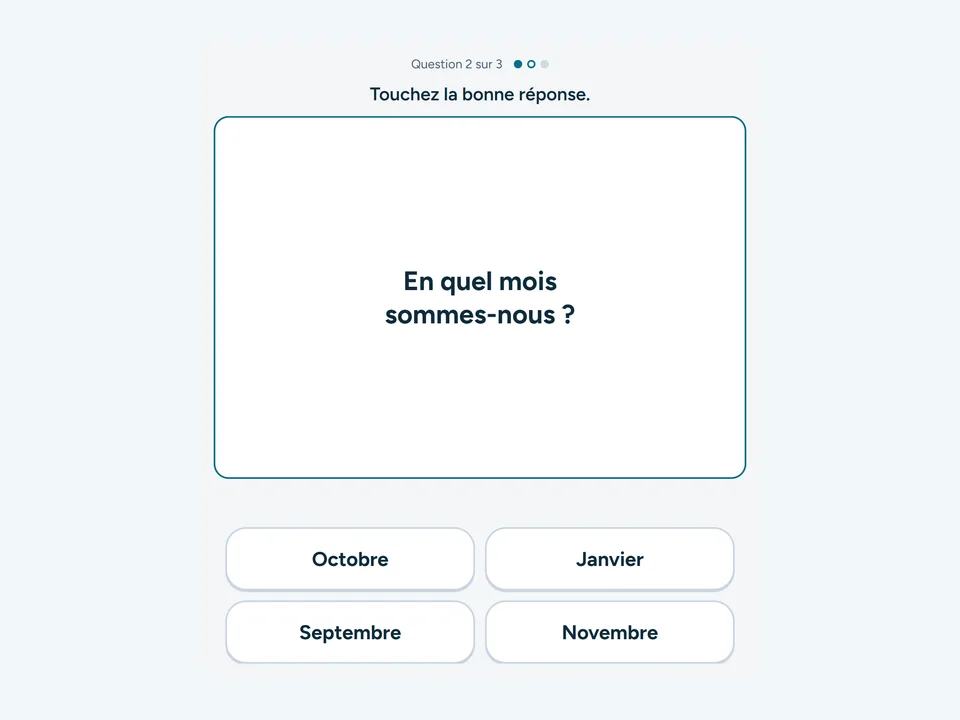
Screenshot of the Temporal Orientation exercise

Orientation

MMSEMoCA ~

Temporal Orientation

Questions on the year, the month, the date, the day, the time of day and the hour: 3, 6 or 12 depending on difficulty.

Temporal orientation

Temporal Orientation

What it trains
Orientation in time, recent memory.
Clinical value
Mirrors the temporal orientation item of the MMSE, based on the actual date. The weighted score stays indicative: it does not reproduce MMSE scoring.
Settings
No theme · FR · EN · HE · Actual date of the day
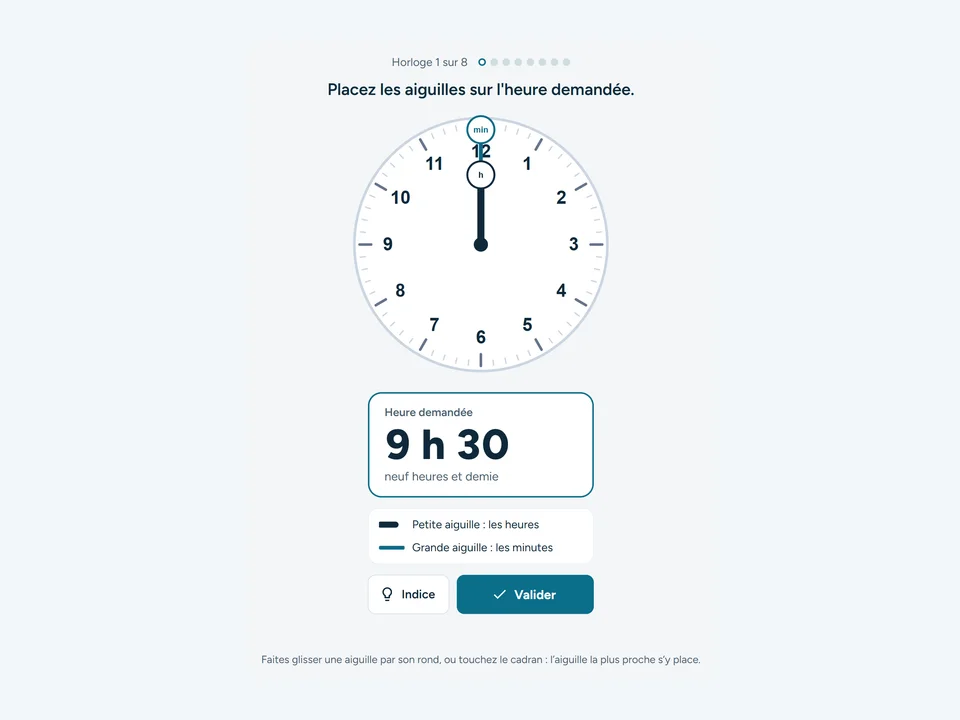
Screenshot of the Clock exercise

Visuoconstruction

NewMoCA ~

Clock

The patient sets both hands of a clock to the requested time, written in 12-hour, 24-hour format or in words.

Visuospatial construction

Clock

What it trains
Analogue representation of time, gesture planning, inhibition of the literal response.
Clinical value
Spots hand reversal, the typical error of the clock drawing test.
Settings
No theme · FR · EN · HE · 12-hour, 24-hour or time in words

Memory

NewMMSE ~MoCA ~

List Recall

Sixteen words shown with their category, then free recall, recall cued by the category, and recognition.

Episodic memory

List Recall

What it trains
Verbal episodic memory: the exercise tells a retrieval difficulty from an encoding difficulty.
Clinical value
The only exercise in the library that separates free recall from recognition, on the FCSRT / RL-RI-16 paradigm.
Settings
Word categories · FR · EN · HE · Levels 1 to 3
Screenshot of the Free Fluency exercise

Language & reading

NewMoCA ~

Free Fluency

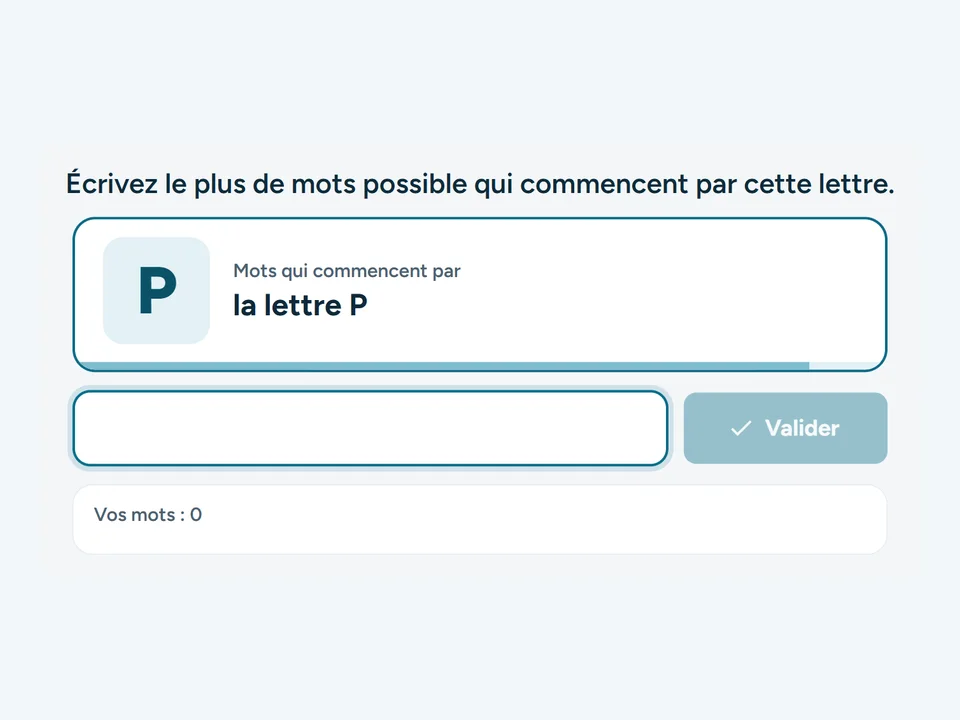
In 60 seconds, the patient types as many words as possible starting with a letter or belonging to a category.

Verbal fluency

Free Fluency

What it trains
Phonemic and semantic fluency, lexical access, search flexibility.
Clinical value
Shows the patient's search strategy: clustered words and switches.
Settings
Letter or category · FR · EN · HE · Levels 1 to 3
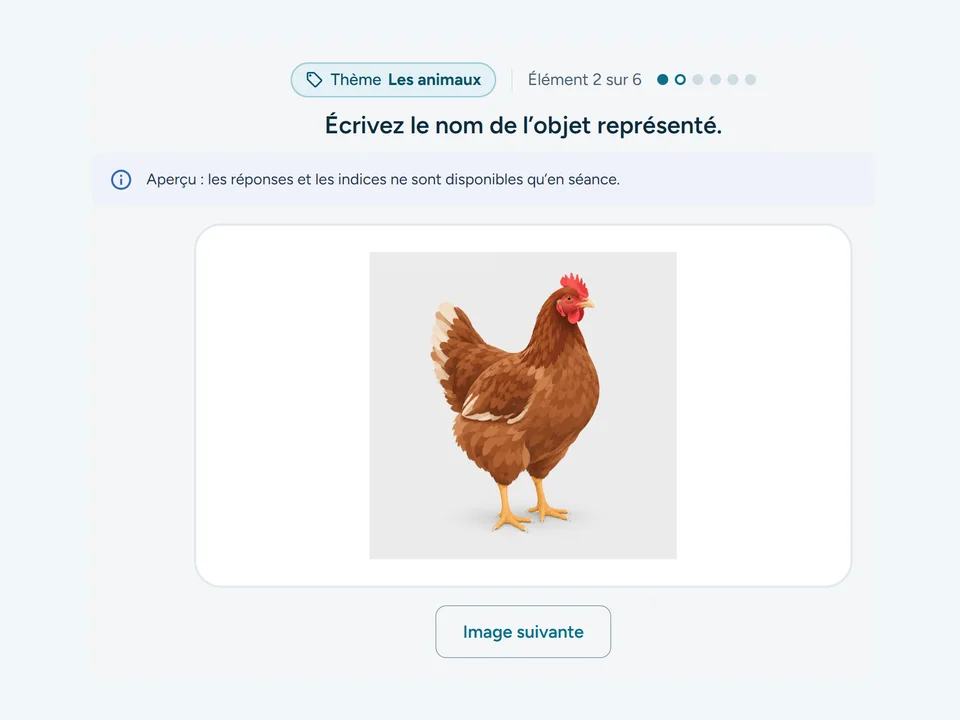
Screenshot of the Picture Naming exercise

Language & reading

NewMMSE ~MoCA ~

Picture Naming

The patient types the name of the object shown. On failure, a sound cue comes, then a meaning cue.

Expressive language

Picture Naming

What it trains
Expressive language, lexical access.
Clinical value
The clinician reviews every answer and can rule alongside the automatic verdict.
Settings
Picture bank validated per language · FR · EN · HE · Levels 1 to 3
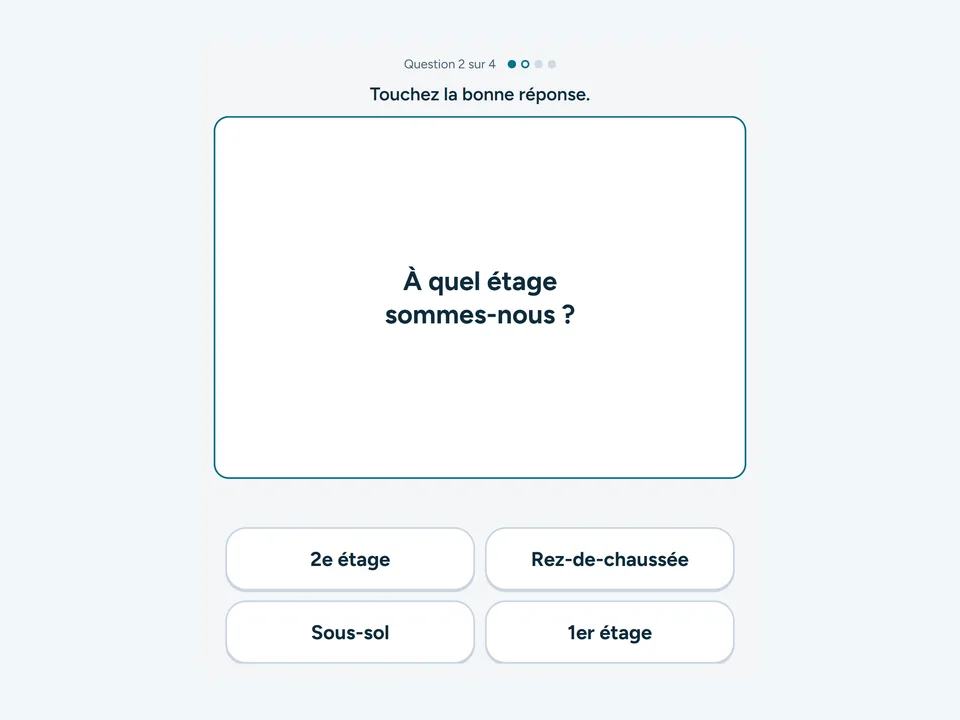
Screenshot of the Spatial Orientation exercise

Orientation

NewMMSE ~MoCA ~

Spatial Orientation

Four-choice questions, from the closest to the widest: room, floor or building, city, region, country.

Spatial orientation

Spatial Orientation

What it trains
Orientation in space.
Clinical value
The clinician enters the right answers for the session location, session by session. The location never leaves the session.
Settings
Session location · FR · EN · HE · Set by the location sheet
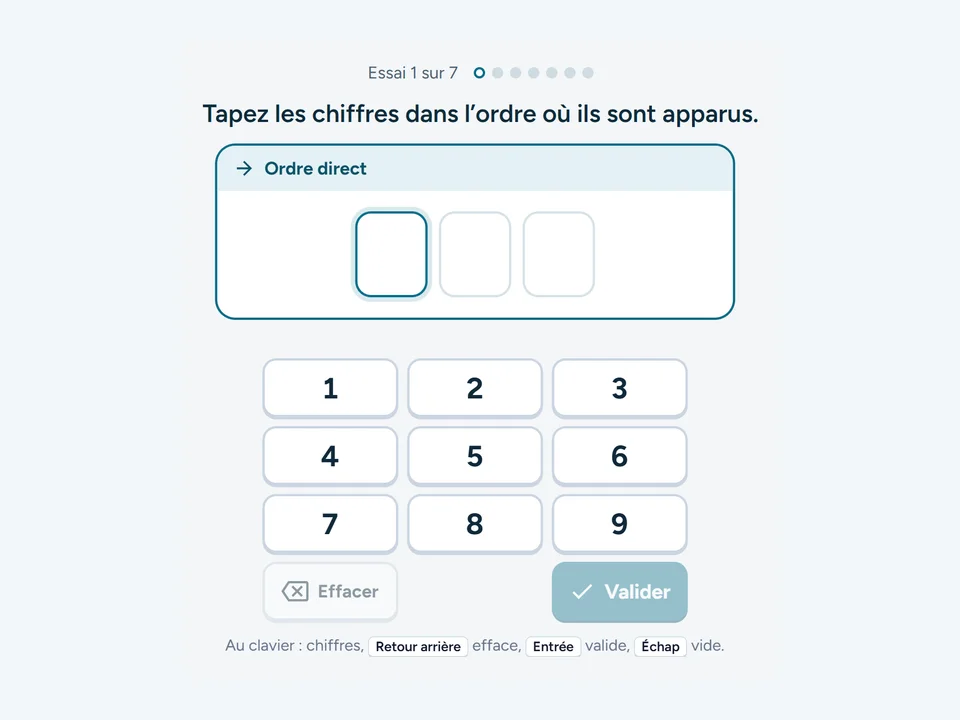
Screenshot of the Digit Span exercise

Memory

NewMoCA ~

Digit Span

The patient retypes longer and longer digit sequences, forwards then backwards.

Working memory

Digit Span

What it trains
Working memory: holding, then manipulating.
Clinical value
Two trials per step, stop after two failures: the procedure follows that of classic span tasks.
Settings
No theme · Language-independent · Levels 1 to 3
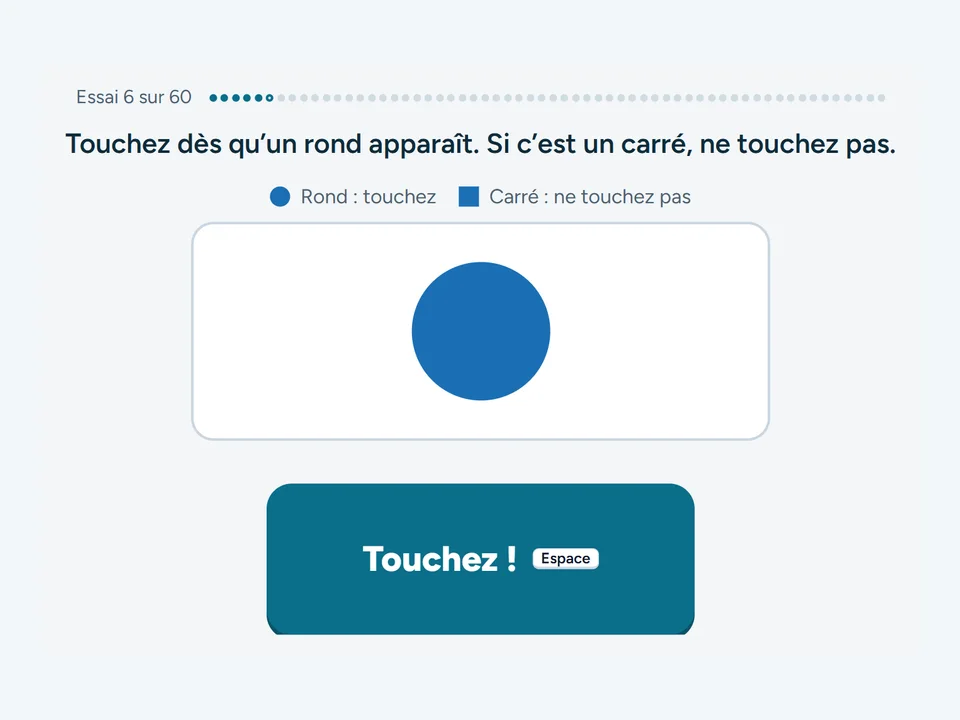
Screenshot of the Go/No‑Go exercise

Attention & inhibition

NewMoCA ~

Go/No‑Go

Shapes scroll past: the patient taps the discs and holds back on the squares.

Reaction time & inhibition

Go/No‑Go

What it trains
Sustained attention, response inhibition.
Clinical value
No feedback between trials: the exercise runs like a vigilance task.
Settings
No theme · Language-independent · Levels 1 to 3
Screenshot of the Multi-Step Command exercise

Language & reading

NewMMSE ~

Multi-Step Command

An instruction of two to four actions, read only once, then carried out on objects on the screen.

Following instructions

Multi-Step Command

What it trains
Verbal comprehension, holding the instruction, sequencing.
Clinical value
Tells a forgotten step from a step done in the wrong order.
Settings
Everyday objects · FR · EN · HE · Levels 1 to 3, two to four steps
Screenshot of the Figure Copy exercise

Visuoconstruction

NewMMSE ~MoCA ~

Figure Copy

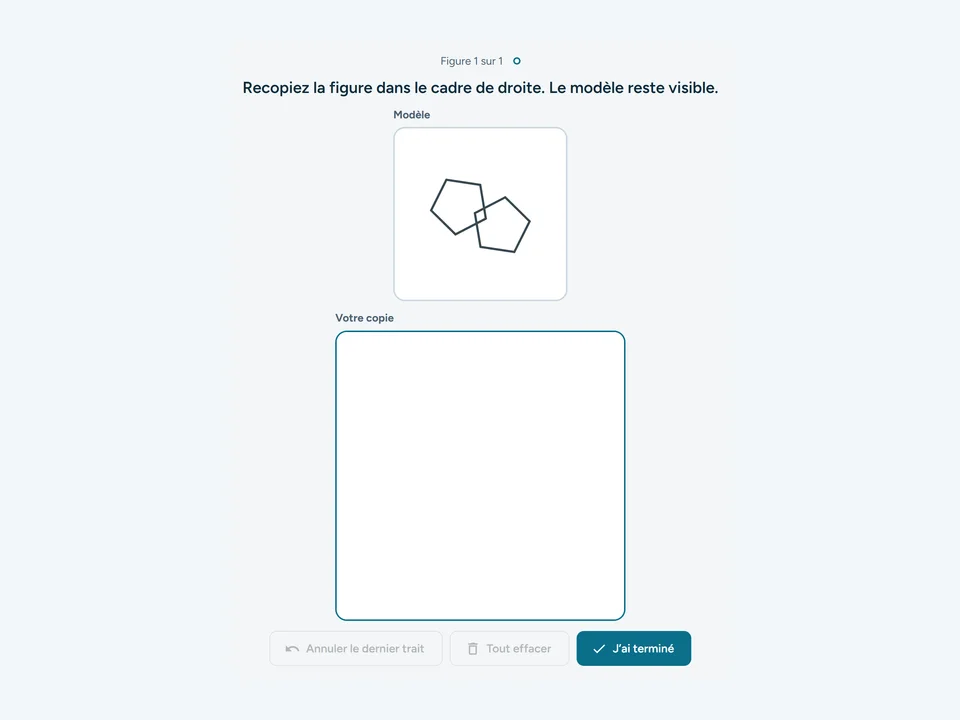
The patient copies the interlocking pentagons or the cube freehand, with the model in view.

Visuospatial construction

Figure Copy

What it trains
Constructional praxis, visuospatial analysis.
Clinical value
Geometric scoring, automatic, stays indicative: the clinician sees the patient's drawing and checks every verdict.
Settings
Pentagons or cube · Language-independent · Choice of model

Customise

Every exercise adapts to the patient.

Theme

Word categories, sentence or text registers, depending on the exercise.

Language

French, English or Hebrew for word-based exercises; the others do not depend on language.

Difficulty

Three levels acting on length, speed, distractors or time pressure.

Automatic draw

Fresh items every session, leaving out those of the patient's last five sessions.

Text size

The patient enlarges the text from 100% to 150%; their choice applies to all their exercises.

The clinician's eye

Review of naming answers, session location for spatial orientation, drawing of the figure copy.

Themes

Content that speaks to the patient.

Exercises based on words, sentences, texts and pictures draw on themes. The clinician picks the one that matches the patient’s daily life or interests: people engage more with an exercise that speaks to them.

Available themes

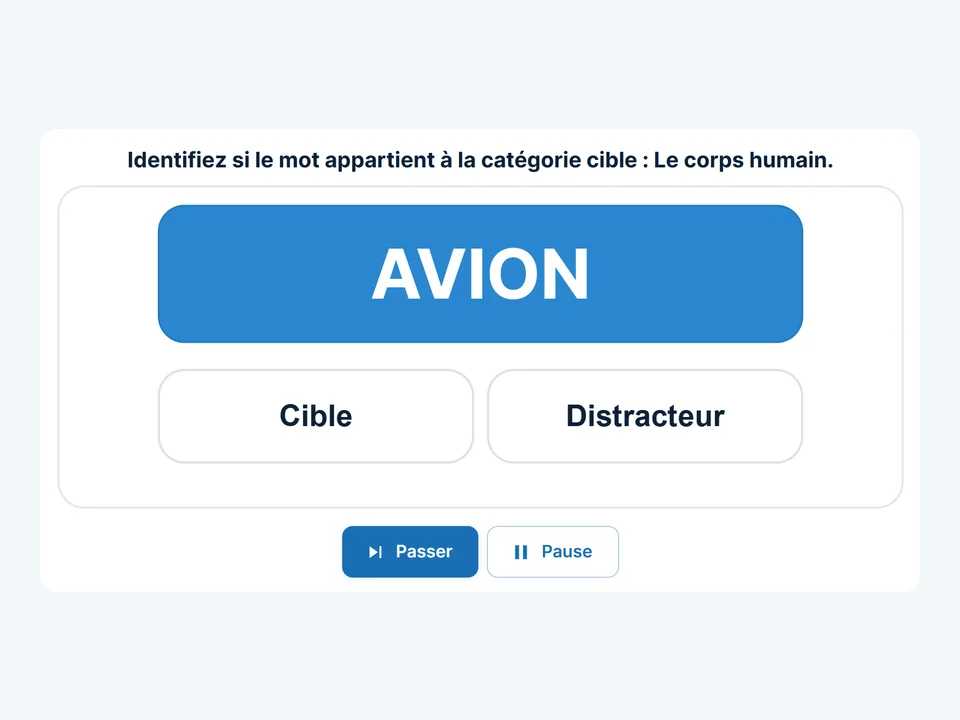
The human body

Body parts, movements, care.

Fruits and vegetables

Market, cooking, seasons.

Clothing

Getting dressed, fabrics, accessories.

Animals

Farm, home, wildlife.

Travel

Transport, hotels, luggage, destinations.

Enrich

A new theme is quick to add.

Adding a theme means delivering a content pack, without changing the exercises. As soon as it is imported, it appears in the settings of every relevant exercise and joins the automatic draw.

  1. Choose the theme with the care team: a trade, a hobby, a region.

  2. Write the pack: words with their hint and syllables, sentences and texts, on three levels and in each language.

  3. Import the pack; NeuroTrack administrators then expand it word by word from the reference data screen.

MMSE / MoCA references

A shared paradigm, not a score.

Several exercises follow the principle of an MMSE or MoCA item. They do not administer that item and produce no battery score. The clinician uses them as a reference when building sessions.

MMSE battery items linked to NeuroTrack exercises
MMSE ~ Related itemExercises
Registration and recall of 3 wordsMemory List, List Recall
Attention and calculationMental Math
Orientation to timeTemporal Orientation
Orientation to placeSpatial Orientation
Three-stage commandMulti-Step Command
Pentagon copyFigure Copy
NamingPicture Naming
MoCA battery items linked to NeuroTrack exercises
MoCA ~ Related itemExercises
Delayed recallList Recall, Memory List
Attention spanDigit Span, Simon Says
Serial subtractionsMental Math
Verbal fluencyFree Fluency, Verbal Fluency
Trail alternationTrail Making
OrientationTemporal Orientation, Spatial Orientation
Clock drawing (hands)Clock
VigilanceGo/No‑Go
Cube copyFigure Copy
NamingPicture Naming

“~” marks a partial link. Temporal Orientation is the only exercise that covers an item, the MMSE one.

Questions

About the exercises.

01Can an exercise be adapted to a patient?

Yes. The clinician chooses the theme, language and difficulty, then the items: drawn at random every session or picked by hand.

02Does the patient always see the same words?

With automatic draw, NeuroTrack leaves out the items seen in the last five sessions that used the same bank. If not enough remain, it tops up with the items seen longest ago.

03Who adds word lists and pictures?

NeuroTrack administrators maintain the reference data: words, sentences, texts and the naming picture bank, validated language by language.

Request a demo

Discover NeuroTrack with our team.

A video demonstration, tailored to your practice and your organisation.

  • Build and assign a session live
  • Assessment protocols and how to read the indicators
  • Your questions about HDS hosting, roles and deployment

Mapping Minds, Tracking Progress

We will get back to you shortly.